The most expensive amiibo is not the one you think. It is not Qbby, not Mega Yarn Yoshi, not the Solaire that GameStop quietly let appreciate. It is a Princess Peach figurine from the original Mario / Smash Bros. wave that left the factory with no legs, ended up at a Best Buy somewhere in the United States, and sold on eBay for $25,100 in December 2014. The buyer paid roughly two thousand times what Nintendo charged for it.
Welcome to the only honest ranking of the most expensive amiibo, which means starting with the manufacturing defects nobody at Nintendo ever meant to ship. The standard rare-amiibo list comes right after, with secondary-market prices cross-checked against the PriceCharting index, Amazon listings, eBay sold history, and the major collector lists across video games coverage. Average loose price ranges sit below sealed-and-new ranges throughout.
1. Manufacturing defects (the rarest amiibo figures of all)
Most amiibo lists rank by what Nintendo released and what the secondary market did to the price afterward. Region locks, retailer exclusives, short prints. That is the production market. Above it sits a much smaller, much weirder market: figures that escaped quality control with something visibly wrong, sold by the lucky person who picked them off a Best Buy shelf, bought by collectors who decided this is exactly what makes a piece worth chasing.
Defect amiibo are the all-time price ceiling. They beat every production rarity, every regional exclusive, every store-locked Solaire. By a lot.
Legless Peach (the all-time record)
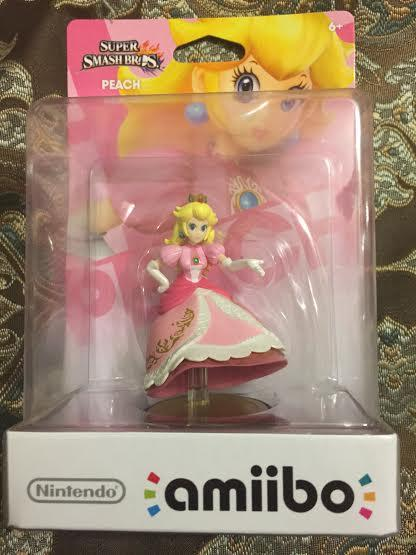
On December 9, 2014, a sealed Princess Peach amiibo from Nintendo's first wave sold on eBay for $25,100. The figure inside the package was a torso. No legs. The seller had picked it up at a Best Buy for $12.99 a few weeks earlier. The auction ran 109 bids from 17 unique bidders, and the winning buyer (132 positive feedback, 100 percent rating) actually paid, which is how Guinness World Records ended up certifying the sale as record number 417875, "most expensive amiibo figure." That number has stood for over a decade.
Late 2014 was a strange time for the amiibo line. Smash Bros. for Wii U had just launched, the figures were selling out, QC was struggling to keep up, and a small wave of obvious factory defects hit US retail in roughly the same six-week window. The Peach was the most extreme but it was not the only one. Several more legless Peaches turned up in the days after the $25,100 sale, plus a "breakdancing" Peach, a Peach with the legs attached on backwards. None of them matched the record. Once collectors knew the defect existed, the artifact value of any single one dropped fast.
Two-cannon Samus
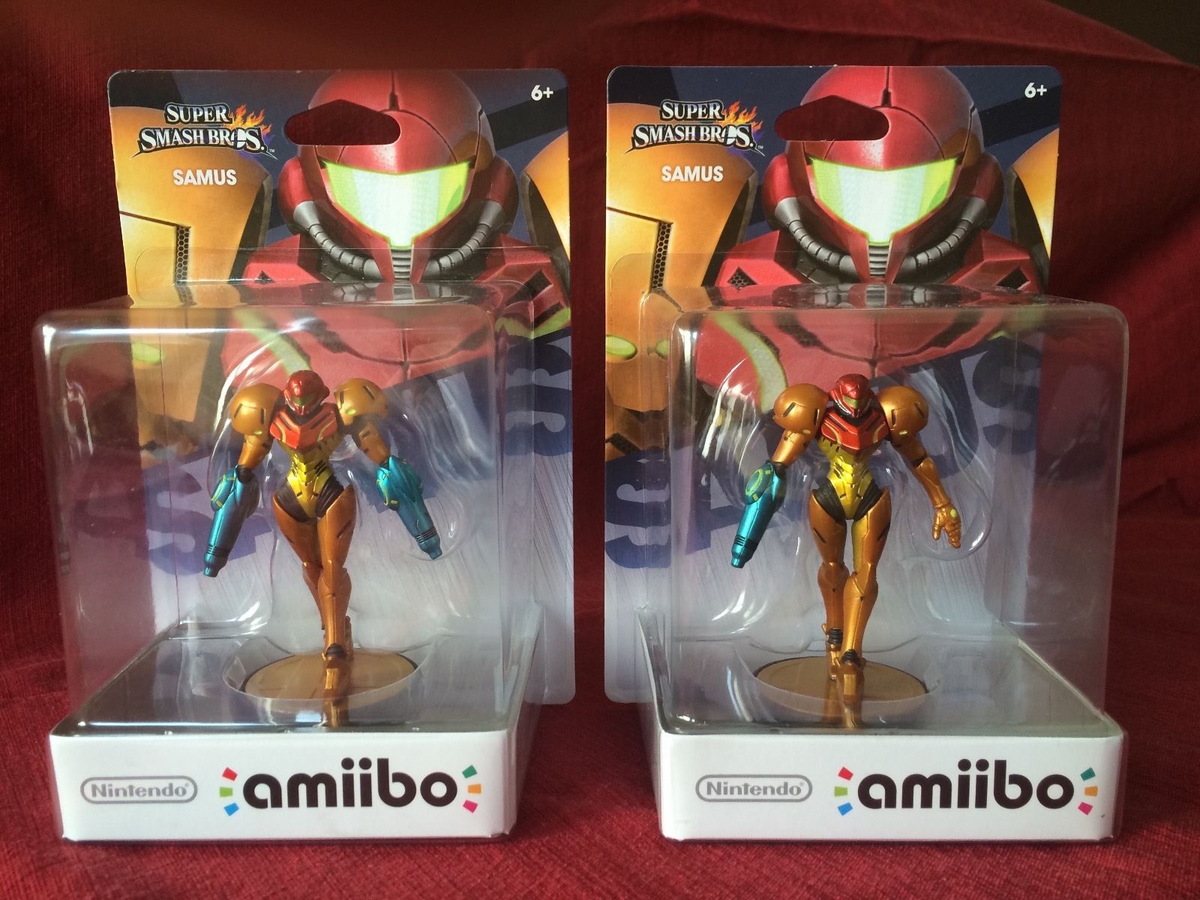
Eight days before the Peach sale, on December 1, 2014, a different defective amiibo went out for $2,500. A Super Smash Bros. Samus with cannons on both arms instead of one. The seller bought it at Best Buy on the day amiibo launched, listed it on eBay a week later, and watched 75 bids come in from 19 unique bidders over a one-week run. The listing's caption read, "Two cannons are better than one," which is the kind of thing you can write when you stand to make roughly two hundred times what you paid.
The seller told GameSpot he had thought about holding the figure but worried about more two-cannon Samuses surfacing and tanking the value. (Reader, this is the correct attitude. The legless Peach was followed by enough imitators that being late to the first sale meant settling for thousands less.) When asked whether he would have given the figure to Nintendo, he said he probably would have, if anyone from Nintendo had reached out. Nobody did.
Broken Ocarina Link (the modern echo)
Defect sales went quiet for years after 2015. Then in 2025 a Link Ocarina of Time amiibo from the Wii U International box, with the ocarina visibly snapped in half inside the package, sold for $4,628. According to Amiibo Price Guide's year-end roundup it was the single largest amiibo sale of 2025. Production rarities have a ceiling that compounds slowly. Defects spike on a one-of-one curve every time a new one surfaces.
Why defects beat production rarities
A regional exclusive is rare in the sense that there are some thousands of them and you are not on the right continent. A defect is rare in the sense that there might be five of them on Earth, and the four other ones are sitting on a shelf somewhere being treated like ordinary amiibo by people who do not know. That gap is the price gap. The legless Peach went for almost seven times the highest sealed Qbby ever. (My one-of-one weakness is for figures with paint slips on the eyes, but I have feelings about display arrangements that nobody asked for.)
The top expensive production amiibos: from Smash Bros. Ultimate to BoxBoy!
Below sits the actual rarest amiibo market: figures Nintendo released as intended, in numbers smaller than collectors would like, distributed in places that made them hard to get if you lived in the wrong country or shopped at the wrong store. The list is the top end of Nintendo's amiibo catalog, the entries you see across the major video games-press rankings of valuable pieces. Prices below are sealed-and-new ranges synthesized from TheGamer, Pocket-lint, Dexerto, Amiibo Price Guide, and PriceCharting. Loose-figure prices run lower across the board.
2. Qbby (BoxBoy!) — about $350 to $500 sealed
The Japan-exclusive Qbby came packaged with the physical 3DS BoxBoy! game, which never got a Western physical release. Tiny IP, tiny print run, single distribution channel. The leader of the production-rarity list across every recent ranking. Loose copies sit in the $240 to $280 range, and sealed copies have spent the last few years drifting up.
3. Lioleia & Cheval (Monster Hunter Stories) — about $200 to $230 sealed
The Lioleia & Cheval two-pack was a Japan-only Monster Hunter Stories tie-in for the 3DS. The removable rider gimmick is unique within the line. No reprint, no Western release, no replacement.
4. Navirou (Monster Hunter Stories) — about $190 to $240 sealed
Same release window, same region lock, same scarcity story. Navirou is the companion piece that completes the Monster Hunter Stories trio. Loose copies are notably cheaper, in the $80 to $130 range, because the box itself is the rarer artifact.
5. Mega Yarn Yoshi — about $165 to $300 sealed
The oversized yarn plush that doubled as an amiibo. In North America it was a Toys "R" Us exclusive, and Toys "R" Us went out of business in 2018. The Japanese and International box variants priced separately. There is no realistic path to a rerelease. The figure also degrades. Yarn pills, plastic tumbles inside the head, the polybag tape yellows. A clean boxed Mega Yarn Yoshi gets harder to find every year, not easier.
6. Splatoon 3-pack (alt-color Inklings) — around $180 to $200 sealed
The Wii U-era three-pack with the green, orange, and purple Inkling variants. Print run was small to begin with because Wii U sales were collapsing, and the alt colors were already a secondary release within the Splatoon line. The set rarely breaks up neatly because all three figures share one box.
7. Yarn Poochy — around $112 to $150 sealed
Bundled only with Poochy & Yoshi's Woolly World on 3DS in 2017. Same yarn-construction problem as Mega Yarn Yoshi, smaller scale, identical no-reprint situation.
8. Samus Aran & Metroid two-pack — around $105 to $150 sealed
The 3DS-era Samus Returns tie-in. The Metroid figure is the only soft-plastic amiibo Nintendo has ever made. No standalone release of either piece in the West outside this bundle.
9. Mii Fighter 3-pack — about $110 sealed
A 2015 set that bundled Brawler, Swordfighter, and Gunner. Sold outside Japan only. No reprint since launch, no individual release of the same sculpts.
10. Gold Mega Man — around $84 to $130 sealed
Came with the Mega Man Legacy Collection Collector's Edition on 3DS in 2016. No standalone release. The Gold Mega Man's chrome paint scuffs easily, so "minty sealed" is a real qualifier on this Mega Man variant. The non-gold Mega Man amiibo from the same wave runs about a quarter of the gold's price, which gives a clean reference point for Nintendo's regular vs limited-color pricing logic.
11. Solaire of Astora — around $94 to $120 sealed
The 2018 Dark Souls: Remastered tie-in. North American distribution went through GameStop only. There are plenty of Smash amiibo, plenty of indie crossover figures, but Solaire is the one that crossed the largest cultural distance in either direction (a FromSoftware character on a Nintendo platform with a Switch sculpt) and collectors have been quietly bidding it up since.
12. Detective Pikachu (large) — around $40 to $60
The oversized Detective Pikachu amiibo from 2018. Eight inches tall, no Switch-era follow-up, gradual upward drift in price as the supply of clean boxes shrinks.
Amiibos that look rare but are not
Wave-1 Smash Bros. Ultimate characters get treated like rarities by people who bought them at the height of the 2014 shortage and never re-checked. Marth, Villager, Mario, Kirby, Wii Fit Trainer all had reprints. First-print boxes still command a slight premium for collectors who care about box codes, but the figures themselves are not rare versions of anything. The same applies to most Legend of Zelda figures from the early Smash waves (the popular Link, Sheik, and Toon Link variants all reprinted through the Wii U / Switch transition). If a list calls 2014-era Marth a $300 amiibo it is using a price from 2015. Cross-reference the user supported PriceCharting index before paying anywhere near that, and skim Amazon's "new and used" listings for the same SKU. The fan community cross-posts mispriced listings on r/amiibo within hours, and most non-variant games for amiibo treat all printings of a given SKU identically, so the box does not change in-game payoff.
The Animal Crossing card series feels rare because there are 470+ cards across five series and most collectors only have a fraction. Individual cards run a couple of dollars; the rare ones spike into the $40 to $80 range only in the Welcome amiibo set and the Sanrio collab. Browse the Animal Crossing card lineup to see the breakdown by series before buying singles.
Cross-checking with the PriceCharting index
Every secondary-market price in this article was sanity-checked against the PriceCharting amiibo top-price index, which is the closest thing the hobby has to a public price record. The index pulls actual eBay sold-listing data, which is more useful than averaged "Buy It Now" prices because it filters out aspirational asks. When a rare-amiibo listicle quotes a dollar figure, the PriceCharting index is the first place to verify. The Smash Bros. Ultimate-era figures, the yarn variants (Yarn Poochy, Mega Yarn Yoshi), and the gold-paint pieces (Gold Mega Man, Gold Mario) all surface near the top of the index in any given week.
How to buy a rare amiibo without getting burned
Three things to verify, in order. First, check that the box code on the back matches the region you want. NA, EU, and JP boxes carry different SKUs and trade at different prices. Second, photograph the figure inside the package from multiple angles before you bid. Most secondhand defects are already known and priced, but the upside is in spotting one that is not. Third, cross-reference the loose-vs-sealed price spread on PriceCharting. If the loose price is two-thirds of sealed, the box is the artifact and any damage to it tanks the resale value of the amiibos in question.
For tracking what you already have or want, the AMiiPEDIA checklist stores everything in your browser (no account, no upload), with notes per amiibo and a scope picker that lets you mark progress against just the lineups you actually collect. The full amiibo database is sortable by release year and games-supported count if you want to find the underrated pieces before they get listicled.
Sources
- Guinness World Records, "Most expensive amiibo figure" (record #417875)
- GameSpot, "Legless Peach Amiibo Sells for $25,000" (December 2014)
- GameSpot, "Samus Amiibo Defect Sells For $2,500" (December 1, 2014)
- TheGamer, "The Rarest Amiibo Figures And How Much They're Worth" (Oct 2024)
- Pocket-lint, "5 Most Expensive Amiibo in 2024"
- PriceCharting, amiibo highest-price index
- Amiibo Price Guide, "Top-10 Most Valuable Amiibo Figures" (Sep 2024)
- Amiibo Price Guide, "The 10 Largest Amiibo Sales of 2025"